

The most common pop chord progression is I–V–vi–IV. In the key of C, that's C–G–Am–F. Play those four chords as a repeating four-bar loop, one chord per bar, and you'll instantly recognize it from hundreds of songs. Once it's under your fingers, transpose it using Roman numerals so it works in any key, as Roman numeral analysis shows.
TL;DR:
- Changing the starting point of the I–V–vi–IV progression alters its mood, from upbeat to introspective or wistful, depending on the rotation used.
- Using inversions and smooth voice leading can make transitions between chords sound more polished and professional in a loop.
- Experimenting with different progressions and voicings in software tools can help find unique, fitting variations without rewriting the entire progression.
- Small rotation swaps, like starting on the minor chord or dominant, can significantly impact song mood without adding new chords or melody changes.
- The I–V–vi–IV progression remains versatile because it follows functional harmony, making it adaptable across keys and genres while maintaining familiarity.
Table of Contents
- What Are the Core Pop Chord Progressions?
- How Rotation Changes the Mood of the Same Four Chords
- Why These Four Chords Keep Working
- Turning a Four-Chord Loop Into an Actual Song Section
- Small Voicing Changes That Make a Loop Sound Professional
- Mapping a Progression in DeputIE, From Loop to Exported MIDI
- One Rotation Change, One Fixed Chorus
- Write Faster With a Tool Built for Chord Experimentation
- Where to Learn More About Chord Progressions
- Sources
What Are the Core Pop Chord Progressions?
The I–V–vi–IV pattern shows up so often in Top 40 radio that musicians nicknamed it the "Axis" progression, and for good reason. In C major it's C–G–Am–F. Move it to G major and it becomes G–D–Em–C. In A major, it's A–E–F#m–D. The chord shapes change, but the relationship between them stays fixed, which is exactly why Roman numeral analysis is worth learning even if you never touch a music theory textbook otherwise.
That's not the only pattern worth knowing. A handful of other progressions cover most of what you'll hear in modern songwriting:
- I–vi–IV–V (doo-wop): the '50s progression behind countless nostalgic ballads and still a go-to for warm, sentimental choruses, as Pianote's breakdown of the 1564 progression explains.
- I–IV–V: the three-chord backbone of classic rock and simple pop, built entirely on major chords for a bright, direct feel.
- vi–IV–I–V: the same four chords as the Axis progression, but starting on the minor chord for a moodier entry point.
- ii–V–I: borrowed from jazz, it resolves with more tension and works well in bridges or pre-choruses that need to feel "unfinished" until they land.
On piano, try simple block chords in the left hand and broken triads in the right to get a feel for the motion before adding rhythm. On guitar, strum through each chord for a full bar with a steady down-up pattern, then experiment with palm-muted eighth notes once the chord changes feel automatic.
How Rotation Changes the Mood of the Same Four Chords
A rotation is just the same four chords started from a different point in the cycle. Using I, V, vi, and IV, you get four distinct progressions depending on where you begin, and Piano is worth practicing in multiple keys until each one feels distinct in your hands:
- I–V–vi–IV (C–G–Am–F): the classic, upbeat and resolved.
- V–vi–IV–I (G–Am–F–C): opens on tension, settles by the end.
- vi–IV–I–V (Am–F–C–G): starts minor, feels moodier even though nothing else changed.
- IV–I–V–vi (F–C–G–Am): opens bright, ends on a wistful note.
Starting on vi instead of I is the single easiest way to make a familiar loop sound more introspective without writing a single new chord. Starting on V creates instant forward pull, useful for a pre-chorus that needs momentum. If you want something less common but still functional, try the Puff schema (I–iii–IV–V) or a five-chord stretch like I–V–vi–iii–IV. Neither is standard, but both are usable, and experimenting with them is how you find a progression nobody else is using this year.
Why These Four Chords Keep Working
Roman numerals describe a chord's function in a key, not its literal notes, which is why the same numbers work whether you're in C or in F#. Once you know a song runs I–V–vi–IV, you can play it in any key a singer needs without relearning the shape from scratch.
The V chord is called the dominant because it creates the strongest pull back to I. That's expected. What catches your ear in the Axis progression is when V resolves to vi instead of I. Music theorists call this a deceptive resolution, and it's a big part of why the four-chord loop feels bittersweet rather than simply happy. Your ear expects home base and gets the relative minor instead.
Here's the part that explains why so many hit songs share a skeleton without sounding like copies:
- Diatonic chords (ones built entirely from the notes of the key) are inherently easy to follow, which is why pop leans on them so heavily.
- Repetition lets listeners predict what's coming, and predictability in harmony frees up attention for melody, lyrics, and production.
- The chords are the frame. Melody, vocal phrasing, tempo, and arrangement are what make two I–V–vi–IV songs sound nothing alike.
Turning a Four-Chord Loop Into an Actual Song Section
Knowing the progression is step one. Turning it into a verse or chorus takes a short, repeatable process.
- Learn the loop slowly, one chord per bar, until your hands move without hesitation.
- Add rhythm: try syncopated strumming or a broken chord pattern instead of straight quarter notes.
- Transpose the same loop into two or three other keys so it stops feeling tied to one shape.
- Write a short melody phrase over the loop, focusing on where the melody notes land relative to the chord tones.
For arrangement, change the rhythm and instrumentation between sections rather than the chords themselves. Drop the bass for a verse, bring in full drums for the chorus, or shift up a whole step for the final chorus to add lift. If you're writing for a singer, pick a key that sits comfortably in their range first. Guitarists often default to G, C, D, A, and E because the open chord shapes are forgiving, so if the song lives on guitar, start there.
Pro Tip: Write the melody before you commit to a final key. It's much easier to find the singer's best range once a melody exists than to write a melody that's boxed in by a key you picked too early.
Small Voicing Changes That Make a Loop Sound Professional

Anyone can play C, G, Am, and F in root position. What separates a demo from a finished-sounding track is voice leading, meaning how smoothly one chord moves into the next.
Instead of jumping to a fresh root position every time, look for inversions that share common tones with the previous chord. Moving from C to G, for instance, sounds smoother if the top note barely moves rather than leaping an octave. Yamaha's guide to pop and rock voicings recommends keeping shared notes in place and shifting only the notes that need to change, a habit that separates amateur loops from professional-sounding progressions almost immediately.
A few practical starting points:
- On piano, invert the Am and F chords so your hand barely shifts position between C and the next two chords.
- Add a walking bass line under a static chord voicing to imply motion the chords alone don't provide.
- On guitar, try a sus2 or sus4 passing chord between two chords in the loop for a half-second of color that resolves cleanly.
Pro Tip: If a transition feels clunky, check whether your bass note is jumping more than a fourth. Smoother bass motion almost always fixes an awkward-sounding chord change before you touch anything else.
Mapping a Progression in DeputIE, From Loop to Exported MIDI
A chord progression workspace can let you enter I–V–vi–IV directly, then cycle through its rotations without retyping a single chord. A visual sequencer can show the loop laid out on a timeline, so you can hear how V–vi–IV–I feels different from vi–IV–I–V before committing to one.
A simple workflow might be:
- Enter the progression in a chord workspace and audition it at tempo.
- Try each rotation and note which one fits the section you're writing (verse, pre-chorus, chorus).
- Swap voicings and inversions in the same workspace to test smoother transitions without retyping chords.
- Export the finished progression as MIDI to drop into a DAW to build out the arrangement.
The point isn't to hand decisions to software. Such tools can surface theory-based options, like rotations and voicing alternatives, while leaving every creative call, melody, and arrangement choice in your hands.
One Rotation Change, One Fixed Chorus
A chorus I was working on sat flat for weeks using a straight I–V–vi–IV loop. Starting the same four chords on vi instead, so vi–IV–I–V, gave the hook the moodier lift it needed without changing a single note of the melody. Small rotation swaps like that solve more problems than writing new chords ever does. Don't copy a progression verbatim and expect it to fit your song. Adapt the rotation and voicing until it does, and check the DeputIE manual if you want a walkthrough of the rotation tools mentioned above.
— Vigilantie
Write Faster With a Tool Built for Chord Experimentation
Some music composition software is designed to help when you're staring at four chords, knowing they work, but not knowing which rotation or voicing actually fits your song. Instead of guessing at the keyboard or scrolling through generic chord charts, these tools give you a visual sequencer and chord progression workspace where you can test rotations, swap inversions, and hear the results immediately.
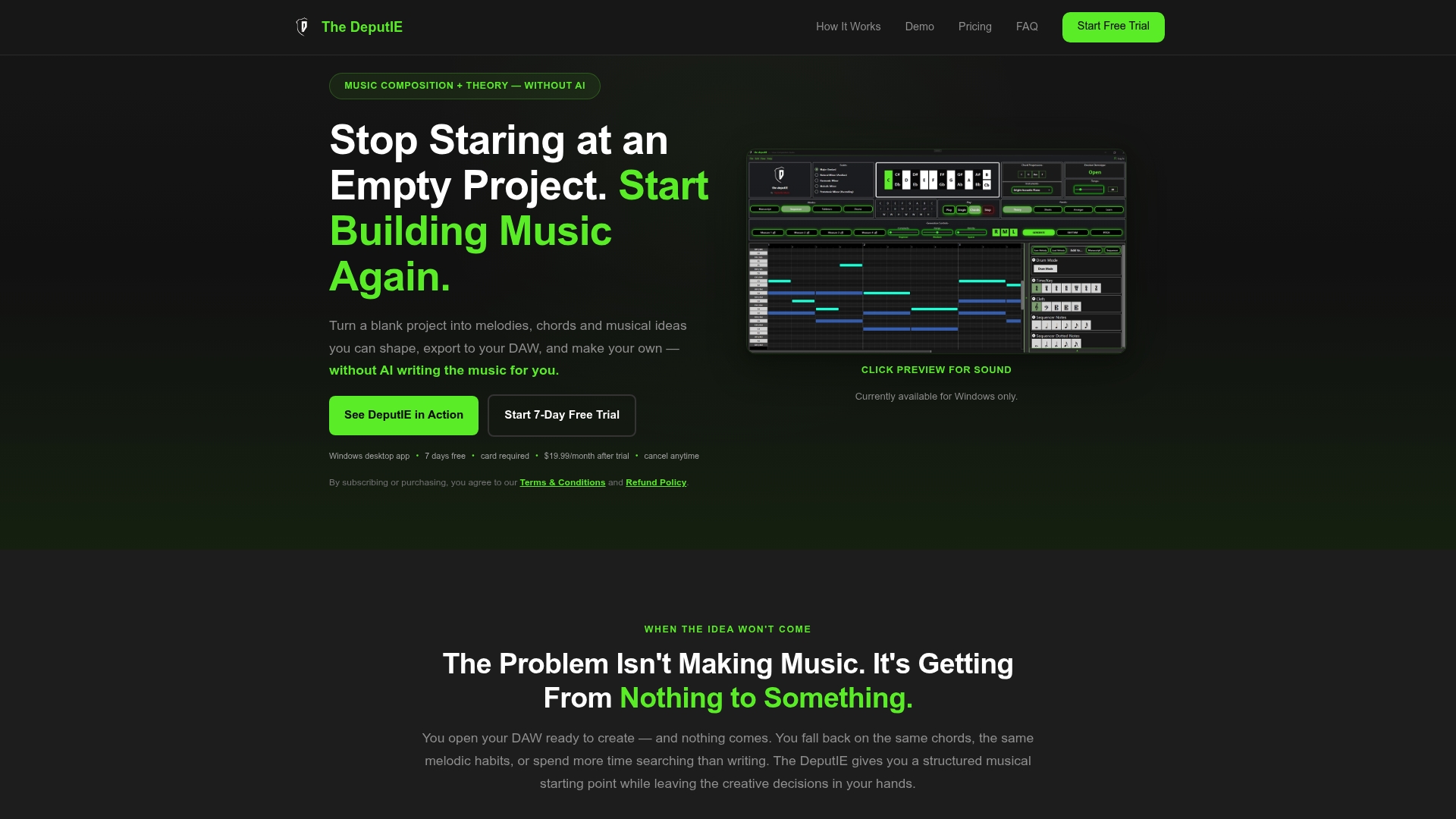
Once a loop feels right, export it as MIDI and drop it straight into your DAW, no re-entering notes, no rebuilding the progression from scratch. It's built for producers and songwriters who want structured, theory-based tools without losing control of their own creative decisions. Start a free trial on the DeputIE product page and map your next chorus before the session ends.
Where to Learn More About Chord Progressions
- Identifying standard pop chord progressions — Ethan Hein
- I–V–vi–IV: the most common pop progression — piano.org
- Common chord progressions and how to make them your own — Berklee
- Pop/rock voicings: part 1 — Yamaha
- The 1564 chord progression, explained — Pianote