
Do a 15-minute garbage-track or step away for 20 to 60 minutes. Pick one and start now. If this is your third dry session this week and you feel physically drained, not just uninspired, that's a different problem than beat block. Routine fatigue tips into burnout, and the fix is rest, not another trick.
TL;DR:
- Rest ears for 20 to 60 minutes or make a bad track for 15 minutes to reset perception and overcome decision fatigue.
- Use radical limitations, templates, or reverse-engineer reference tracks to reduce decision paralysis during creative sessions.
- Separate sound design from songwriting and build structured routines to prevent recurring beat block and reduce setup friction.
- Implement prompts like limiting sounds or repurposing old tracks to push creative boundaries and discover new ideas.
- For persistent exhaustion, switch to activities outside production or take extended breaks, especially if burnout symptoms like dread and loss of interest persist beyond weeks.
Table of Contents
- 10 Fast Ways to Overcome Beat Block Mid-Session
- What Workflow Habits Prevent Beat Block From Coming Back?
- Which Creative Prompts Actually Break a Dry Spell?
- Is It Beat Block, Routine Fatigue, or Burnout?
- How Composition Tools Help You Get Unstuck Faster
- A Producer's Fix for a Dead Session
- Where The DeputIE Fits When Structure Is What's Missing
- Sources
- FAQ
10 Fast Ways to Overcome Beat Block Mid-Session
Most beat block isn't a talent problem. It's a friction problem, and friction has fixes. Work through this list in order when you hit a wall.
- Rest your ears first. After 45 minutes of looping the same eight bars, your ears stop hearing accurately. Stepping away for 20 to 60 minutes restores that perceptual freshness and often exposes a mix problem you'd been missing entirely.
- Set a 15-minute timer and make something bad on purpose. Removing the pressure to be good is often what unlocks the next good idea.
- Cut yourself down to 3 tracks and one synth. Radical limitation kills decision paralysis fast.
- Reverse-engineer a reference track. Spend 20 minutes mapping its intro, buildup, drop, and breakdown, then react against that skeleton instead of a blank one.
- Open a template instead of an empty project. Fewer decisions at the start means less resistance.
- Clean your desk or move rooms. A physical reset often breaks a mental loop.
- Start with drums instead of melody. Swapping your entry point resets the whole session.
- Use the delete key without fear. Save incremental versions so nothing is ever truly lost.
- Text another producer and ask for one idea. Outside energy can dislodge a stuck session faster than anything you do alone.
- Know your stop rule. If nothing's clicked after 45 minutes of trying these, end the session. Pushing past that point rarely produces anything you'll keep.
Pro Tip: Keep a "graveyard" project file for garbage-track sessions. Six months later, half of those throwaway loops are usually salvageable hooks.
What Workflow Habits Prevent Beat Block From Coming Back?
Session fixes solve today's problem. Recurring block needs a structural fix, and that starts with separating two jobs people wrongly treat as one.
Sound design and songwriting use different brains. Producers who separate patch-building and sample organizing from actual writing days report far fewer session-level blocks, because every writing session starts with zero setup friction.
- Dedicate one or two days a week purely to building patches, tagging samples, and organizing your library. Writing days become friction-free.
- Build a habit around short, low-stakes sessions. Consistent 20-minute daily sessions build cumulative momentum more reliably than occasional six-hour marathons.
- Build a template with your go-to drum bus, a few starter chords, and a reference track already loaded.
- Save incrementally (v1, v2, v3) so you can experiment without fear of ruining a good idea.
- Finish old projects before starting new ones. Half-finished tracks pile up and quietly add to the pressure that causes block.
Pro Tip: The same discipline that builds instrumental skill, like the structured routines clarinetists use to practice efficiently, applies directly to beat making. Short, repeatable structure beats sporadic long sessions almost every time.
Which Creative Prompts Actually Break a Dry Spell?
Treat a prompt as a door, not a topic. A prompt like "rainy Tuesday, 6 AM" isn't meant to be literal. It's meant to trigger a specific memory or image with real detail, and that detail is what turns into a melody or a lyric idea worth keeping.
- Set an 8-sound limit for one full beat.
- Write one full section using only one chord.
- Build a beat with a single instrument, no layering.
- Pick a favorite track and copy its structure exactly, then swap every sound.
- Run the 15-minute garbage-track exercise and don't judge the output until it's done.
- Sample something from your kitchen or street outside.
- Write the chorus first, backward from an ending.
- Flip a genre you've never touched into your usual style.
- Use only presets, no custom sound design, for one track.
- Cap yourself at four minutes of total runtime.
- Build a beat around one word.
- Finish a track you abandoned six months ago, unchanged.
Constraints don't just speed up the process, they often push you toward combinations you'd never have tried with unlimited options.
Is It Beat Block, Routine Fatigue, or Burnout?
These three get lumped together, and treating burnout like ordinary beat block usually makes it worse. Routine fatigue shows up as boredom with your usual sounds, and it responds well to the workflow swaps above. Burnout shows up as dread, exhaustion, and a total loss of interest that doesn't lift after a day off. That distinction determines whether you push through with structured exercises or stop entirely.
- Routine fatigue: usually resolves within a session or two of workflow changes.
- Burnout: often needs several days to weeks of a guilt-free, complete break from production.
- If the exhaustion persists past a couple of weeks or comes with anxiety about opening your DAW at all, talk to a therapist and describe it plainly. Say you've lost the ability to feel reward from a creative task you used to enjoy.
- Recovery rituals that actually help: listening to music purely for pleasure with no analytical ear, going outside, or doing a physical hobby with zero connection to your studio.
Long-term producers tend to treat the daily habit itself, kept low-bar and consistent, as their strongest defense against months-long block, valuing completion over polish.
How Composition Tools Help You Get Unstuck Faster
Structured workspaces exist specifically to lower the barrier between an idea in your head and something playable. Visual sequencers, chord progression helpers, and MIDI export let you capture and test ideas fast while keeping the decisions, and the sound, yours.
- Sketch a chord progression visually before committing to a full arrangement.
- Export as MIDI and drop it straight into your existing DAW without rebuilding anything.
- Try one small task first, like sketching four chords and exporting them, rather than trying to finish a full track inside a new tool on day one.
MIDI compatibility matters here because it means a five-minute sketch in a composition workspace doesn't trap you there. It moves straight into whatever DAW you already produce in.
A Producer's Fix for a Dead Session
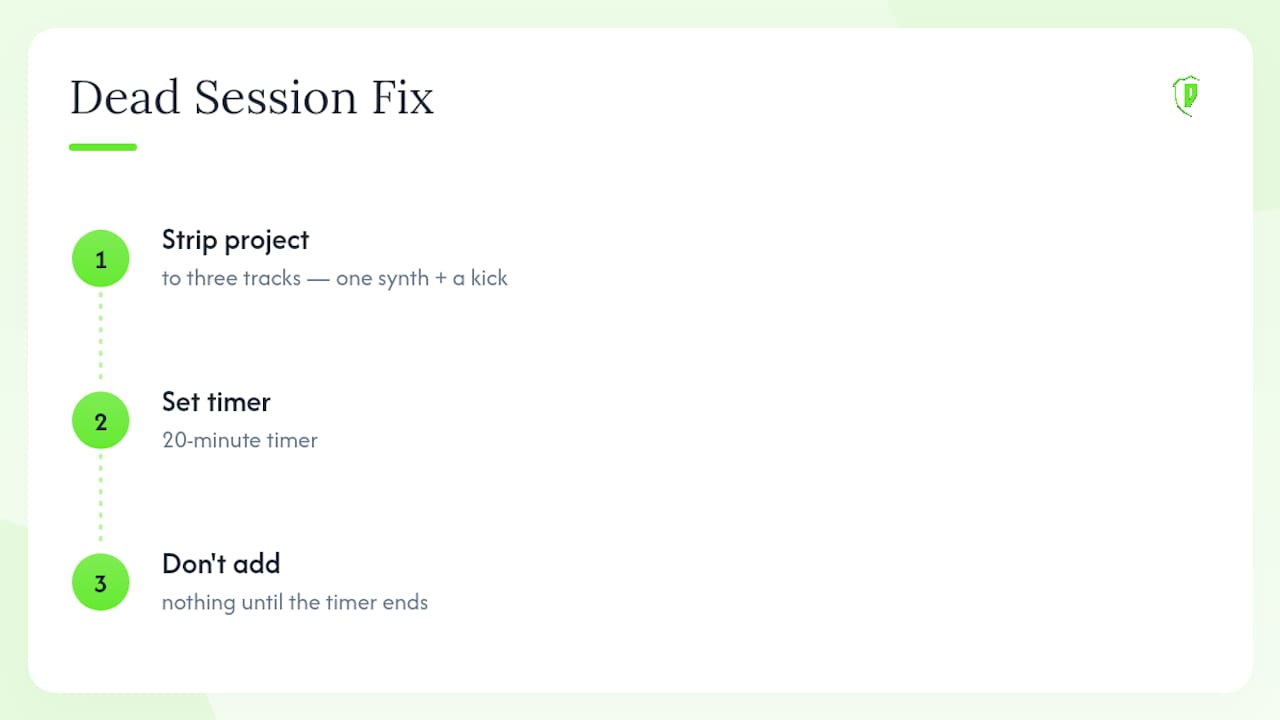
One late night, three hours in, nothing was working. The fix wasn't more effort, it was cutting the session to one synth and a kick. Twenty minutes later, there was a hook.
Copy this: strip your project to three tracks, set a 20-minute timer, and don't add anything until the timer ends.
— Vigilantie
Where The DeputIE Fits When Structure Is What's Missing
Sometimes beat block isn't about motivation. It's about not having a fast way to test a chord idea before it evaporates. Some composition tools provide a visual sequencer and chord progression workspace built for exactly that moment, so you can sketch, hear, and adjust an idea without opening a full DAW session first.
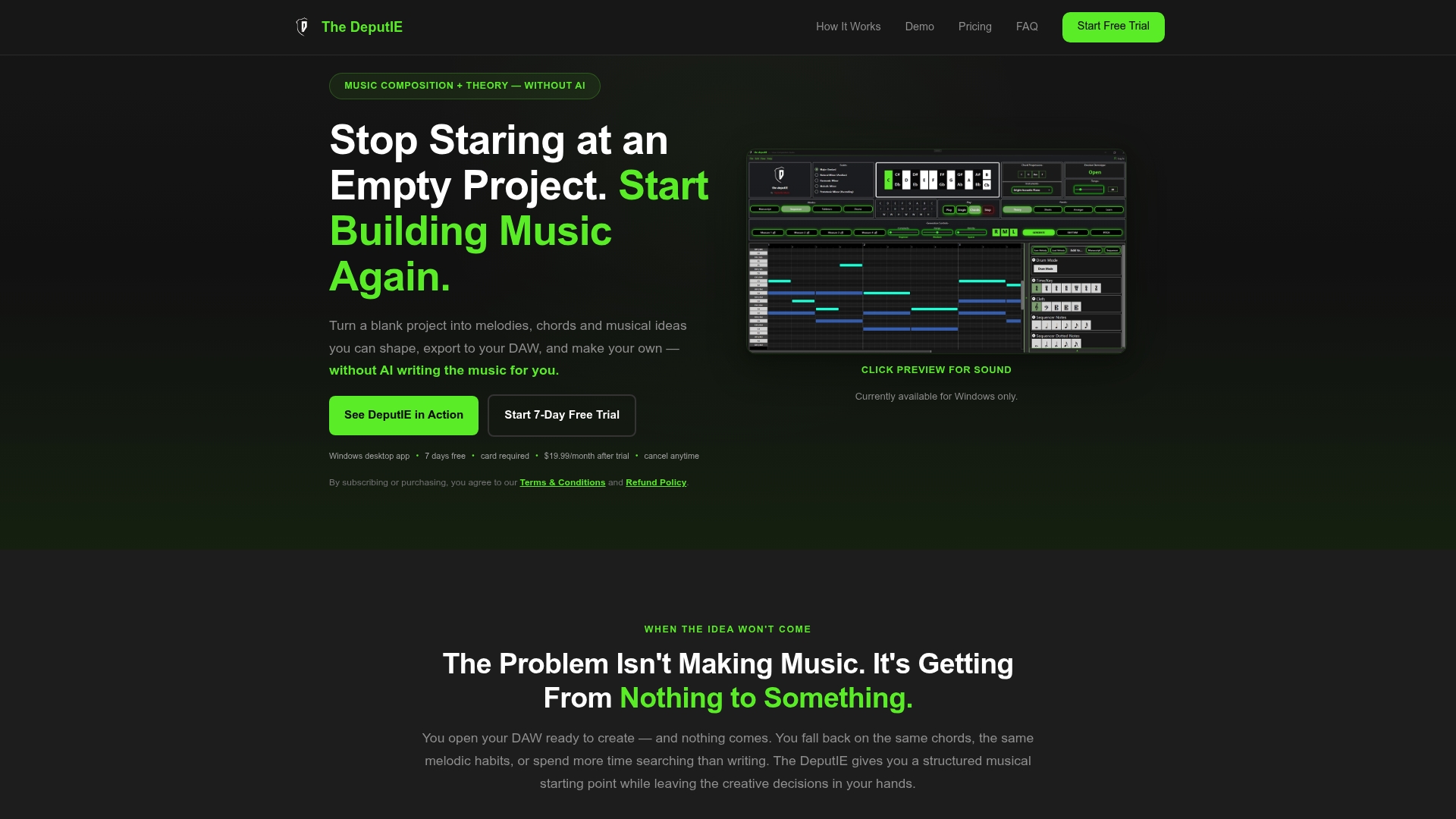
A good first task: build a four-chord progression in the chord workspace, export it as MIDI, and drop it into your DAW as a starting skeleton for your next session. The user manual walks through that exact workflow if you want a guided first run. You can trial The DeputIE without derailing your current projects, since anything you build exports cleanly into the software you already use. This article is published by Vigilantiemusic, the company behind The DeputIE.
Sources
- How to Find Inspiration for Music Production: The Ultimate Guide to Beating "Beat Block"
- 30 songwriting prompts — context on fatigue vs. burnout
- Creative Block for Beatmakers: 17 Ways to Get Unstuck (2025)
FAQ
How Do You Overcome Beat Block?
Start with a 15-minute garbage-track exercise or step away from your session for 20 to 60 minutes to rest your ears. If the block persists across multiple sessions, shift to workflow fixes like separating sound design days from writing days.
What Does Beat Block Actually Mean?
Beat block is the point where a producer can't generate or finish musical ideas, usually caused by decision fatigue, ear fatigue, or perfectionism rather than a lack of skill.
Can You Improve Your Sense of Rhythm?
Yes. Rhythm improves with consistent, short daily practice, the same principle behind building a daily short-session habit to prevent beat block from recurring.
Can You Legally Own a Beat You Make?
Yes, a producer typically owns full copyright to an original beat the moment it's created, though licensing terms change if you sell or lease it to someone else. Check the specific agreement's language before assuming full ownership transfers.
What's the Difference Between Beat Block and Burnout?
Beat block is often session specific and resolves with a workflow change or a short break, while burnout involves sustained exhaustion that needs a longer, guilt-free rest and sometimes professional support.