
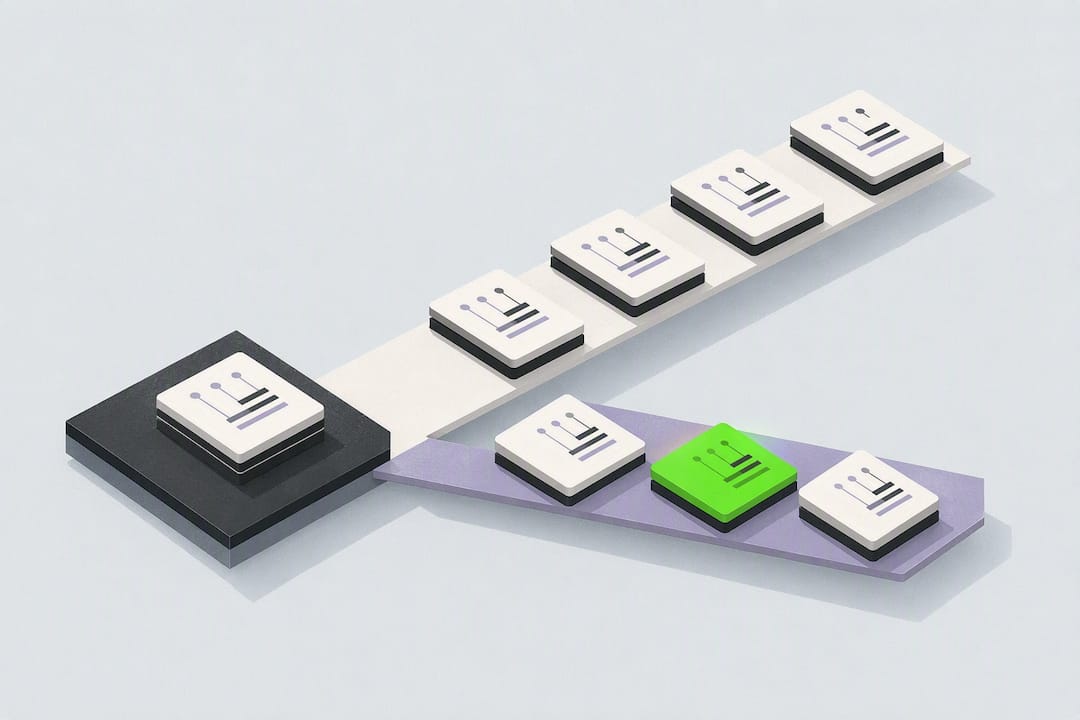
Chord substitution means swapping one chord for another that keeps the same harmonic job (tonic, subdominant, or dominant) while changing the sound's color. Use it to recolor a repeated section, sharpen a cadence, or add chromatic bass motion without rewriting your melody. The workhorses are diatonic swaps, secondary dominants, and the tritone substitution, and each earns its place for a different reason: some just change the mood, others actively pull the ear toward resolution.
TL;DR:
- Diatonic substitutions like swapping I for vi or IV for ii subtly darken or lighten the mood without changing the harmonic function.
- Tritone substitutions replace a dominant seventh with one a tritone away, maintaining tension resolution through shared guide tones while creating chromatic bass movement.
- Secondary dominants temporarily tonicize non-root chords, adding tension and embellishing progressions without altering the overall key.
- Proper voice leading requires smooth, small-note movements to preserve the effect of substitutions and avoid jarring bass leaps.
- Limiting multiple substitutions in a phrase and testing them in low-risk sections help maintain clarity and musical coherence during reharmonization.
Table of Contents
- What Chord Substitution Actually Does to a Progression
- A Practical Workflow for Trying Substitutions in Your Own Songs
- Three Worked Examples: Pop, Jazz, and Songwriter Reharmonization
- Common Mistakes That Make Substitutions Sound Wrong
- How The DeputIE Helps You Test Substitutions Fast
- Tension, Release, and What Substitution Actually Changes
- Chord Substitution Across Genres
- Voice Leading: The Real Skill Behind Smooth Substitutions
- A Short History of How Substitution Practices Evolved
- Where to Learn More About Reharmonization
- Try It Yourself With The DeputIE
- Where Conventional Substitution Advice Misses the Point
- Sources
- FAQ
What Chord Substitution Actually Does to a Progression
Berklee Online describes substitution as changing the lighting in a room, not moving the walls. You keep the structural function intact while altering its color, which is why a good substitution rarely sounds "wrong" even when it surprises the listener. The chord's job in the progression, whether it's providing stability, tension, or forward pull, stays the same. Only its flavor shifts.
Here's the toolkit, roughly in order of how often you'll reach for each one:
- Diatonic (relative) swaps: I and vi share two notes in most keys, so swapping the tonic for its relative minor barely disturbs the harmony while darkening the mood. The same logic works for I↔iii and IV↔ii, since chords built on scale degrees within the same key naturally share tones with the chord they're replacing.
- Tritone substitution: Replace a dominant seventh with the dominant seventh a tritone away (G7 becomes D♭7 in the key of C). Both chords contain the same tritone between their guide tones, the 3rd and 7th, so the tension resolves identically even though the root jumps six semitones.
- Secondary dominants: Borrow the V of any diatonic chord to briefly tonicize it. V/V (D7 in the key of C) or V/vi (E7 resolving to Am) create a miniature pull toward a chord that isn't your home key, and this device shows up constantly in pop bridges and jazz turnarounds.
- Modal interchange, backdoor progressions, and the Neapolitan: Borrow chords from a parallel mode (minor iv, ♭VII7, or the ♭II major triad) to inject color that diatonic harmony can't produce on its own.
- Diminished and vii° substitutes: A vii°7 chord functions almost identically to a rootless dominant seventh, since it shares three notes with the V7 it's standing in for.
The through line across all five is guide-tone preservation. Whatever you swap in, if the 3rd and 7th (or their functional equivalents) still point toward the same resolution, the progression holds together. Lose those notes, and you've changed the song's direction, not just its color.
One number worth remembering: the tritone interval itself is exactly six semitones, which is why a tritone substitution always lands a chord root a perfect fifth away in the opposite direction of where the original chord would resolve. That symmetry is the whole mechanism.
A Practical Workflow for Trying Substitutions in Your Own Songs
Substitution works best as a deliberate, testable process rather than a guess. Here's a sequence that keeps you from breaking a song while you experiment with it:
- Map the function first. Go chord by chord and label each as tonic, predominant, or dominant. You can't safely substitute a chord until you know what job it's doing.
- Flag your guide tones. For any dominant chord, find the 3rd and 7th. For any chord under a melody note, note which chord tone the vocal or lead line is landing on.
- Swap one chord at a time. Change a single chord, play the whole phrase, and compare it against the original before touching anything else. Stacking three substitutions at once makes it impossible to hear what each one contributes.
- Use turnarounds and repeats as your test bed. The final two bars of a verse or a chorus that repeats four times are low-risk spots. If a substitution clashes there, you've lost nothing; if it works, you've found a hook.
- Check the bass line. Does the new chord create a smooth stepwise or chromatic motion into the next root, or does it leap awkwardly? Root motion is the fastest diagnostic for whether a substitution is landing.
Three exercises to run this week: try a tritone substitution on the V chord of any ii–V–I already know, swap vi for I somewhere in a chorus you've written, and insert a secondary dominant (V/x) directly before a chord you want to emphasize.
Pro Tip: Before judging whether a substitution "works," sing or play the melody over both versions back to back. Your ear will catch a clash in about two seconds that theory analysis alone can miss.
Three Worked Examples: Pop, Jazz, and Songwriter Reharmonization
Seeing a substitution on the page is worth more than any explanation of why it works. Here are three, each pulled from a different stylistic context.
-
Pop: I–V–vi–IV. Try substituting vi for the opening I, turning the progression into vi–V–vi–IV for a verse that feels a shade more wistful before the chorus resets to the brighter original. A second option: swap the closing IV for ii, since both are predominant chords and the shift barely disturbs a vocal melody sitting on the root or fifth of the key.
- Voicing note: keep the melody note doubled in the new chord if it's a chord tone; if it isn't, favor a voicing that places the melody note as a color tone (a 9th or 6th) rather than dropping it.
-
Jazz: ii–V–I with a tritone substitution. In the key of C, Dm7–G7–Cmaj7 becomes Dm7–D♭7–Cmaj7. The tritone sub trades a fifth-based bass motion (G to C) for a half-step chromatic descent (D♭ to C), which is exactly the effect arrangers reach for the tritone sub to create instead of a wider root leap.
- Voicing note: voice the D♭7 as a rootless shell (3rd, 7th, plus a color tone like the 9th or 13th) so the tritone between the guide tones stays audible.
- For soloing over the D♭7, the Lydian dominant scale (D♭ Lydian dominant, built on the fourth degree of A♭ major) avoids clashes that a plain mixolydian scale can create against the altered color.
-
Songwriter: backdoor progression. A common move is iv–♭VII7–I, borrowed from the parallel minor. In C major, that's Fm–B♭7–C, and it lands with a darker, more cinematic pull into the tonic than a standard IV–V–I cadence.
- What to listen for: the bass drops by a whole step from B♭ to C rather than climbing a fifth, which softens the arrival and makes it feel earned rather than triumphant.
Common Mistakes That Make Substitutions Sound Wrong
Most substitution problems trace back to one of four fixable errors:
- The melody note disappears. If your substitute chord doesn't contain the note the vocal is singing, either revoice the chord to include it as a color tone or skip the substitution in that bar.
- The function changes by accident. Swapping a dominant chord for something that isn't functioning as a dominant kills the pull toward resolution. Match roles, not just chord shapes.
- Too many substitutions at once. Reharmonizing every chord in a phrase turns clear harmony into mud. Limit yourself to one substitution per phrase or per repeat until you know the song can support more.
- Awkward bass leaps. A substitution that sounds smart on paper can create a clumsy jump in the bass. Try a rootless voicing or alter the bass note itself to smooth the motion.
How The DeputIE Helps You Test Substitutions Fast
Auditioning five different substitutions by hand, replaying each one, and comparing them takes real time. Chord progression workspaces and visual sequencers let you toggle a substitute chord in and out while the rest of the arrangement keeps playing, so you can compare versions in seconds instead of minutes.
Once a substitution earns its place, export the progression as MIDI and carry it straight into your DAW for full arrangement work. The DeputIE user manual walks through step-by-step exercises, including trying a tritone substitution on a ii–V–I, so you can practice the workflow described above inside the software itself rather than just on paper.
Tension, Release, and What Substitution Actually Changes
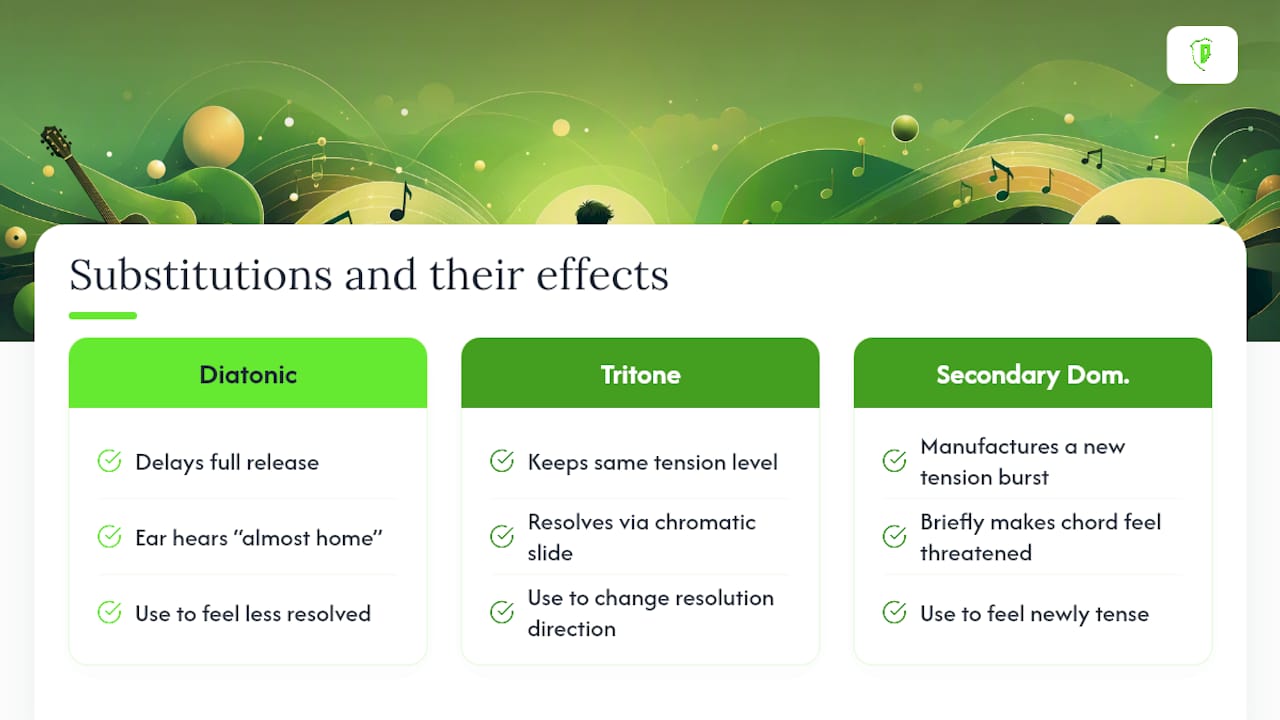
Every chord progression runs on a cycle of tension building toward release. Substitution lets you adjust how sharp or gentle that cycle feels without touching the underlying structure. A tritone substitution, for instance, keeps the same tension level as the dominant it replaces (both chords share the same tritone) but changes how that tension resolves, trading a fifth-based drop for a chromatic slide.
Diatonic substitutions work the opposite way: swapping vi for I at a cadence point actually delays full release, since vi carries some of the tonic's stability but not all of it. The ear registers "almost home" rather than "arrived," which is why so many pop choruses use a vi chord to stretch out anticipation before the true tonic lands a few bars later.
Secondary dominants do the reverse of both. They manufacture a burst of tension where none existed, briefly making a diatonic chord feel like a temporary tonic under threat, then release it exactly where you'd expect. Used sparingly, this makes a static progression feel like it's traveling somewhere even when it technically never leaves the key.
The practical takeaway: decide first whether you want a moment to feel more resolved, less resolved, or newly tense, then pick your substitution category based on that goal rather than picking a chord because it sounds interesting in isolation.
Chord Substitution Across Genres
Jazz treats substitution as a near-constant vocabulary. Tritone subs, secondary dominants, and altered dominants appear so often in jazz chord changes that a lead sheet's written chords are often treated as a starting suggestion rather than a fixed script.
Pop and rock use substitution far more sparingly and usually for a specific emotional beat: a single vi-for-I swap in a bridge, or a borrowed ♭VII chord to signal a genre shift within a song. Overusing jazz-style reharmonization in a pop context tends to fight the genre's expectation of harmonic stability.
R&B and neo-soul sit between the two, leaning on modal interchange and extended diatonic substitutes (adding 9ths and 11ths to relative chords) to create lush harmony that still resolves predictably enough for a vocal-driven song.
Folk and singer-songwriter material tends to favor the simplest substitutions: relative major/minor swaps and the occasional secondary dominant, since the genre's strength usually comes from lyrical and melodic clarity rather than harmonic surprise. Matching your substitution density to genre expectations matters as much as picking the right chord.
Voice Leading: The Real Skill Behind Smooth Substitutions
A substitution can be theoretically correct and still sound clumsy if the notes don't connect smoothly from one chord to the next. Voice leading, moving each note in a chord by the smallest practical distance, is what separates a substitution that glides from one that lurches.
Start by tracking your guide tones through the change. If the 3rd of one chord can resolve down a half step into the 3rd or 7th of the next, keep that motion in your voicing rather than jumping to root-position chords every time. This is especially critical in tritone substitutions, where the chromatic bass descent is the entire point of the device; if your voicing buries that motion under a wide leap elsewhere, you lose the effect you substituted for in the first place.
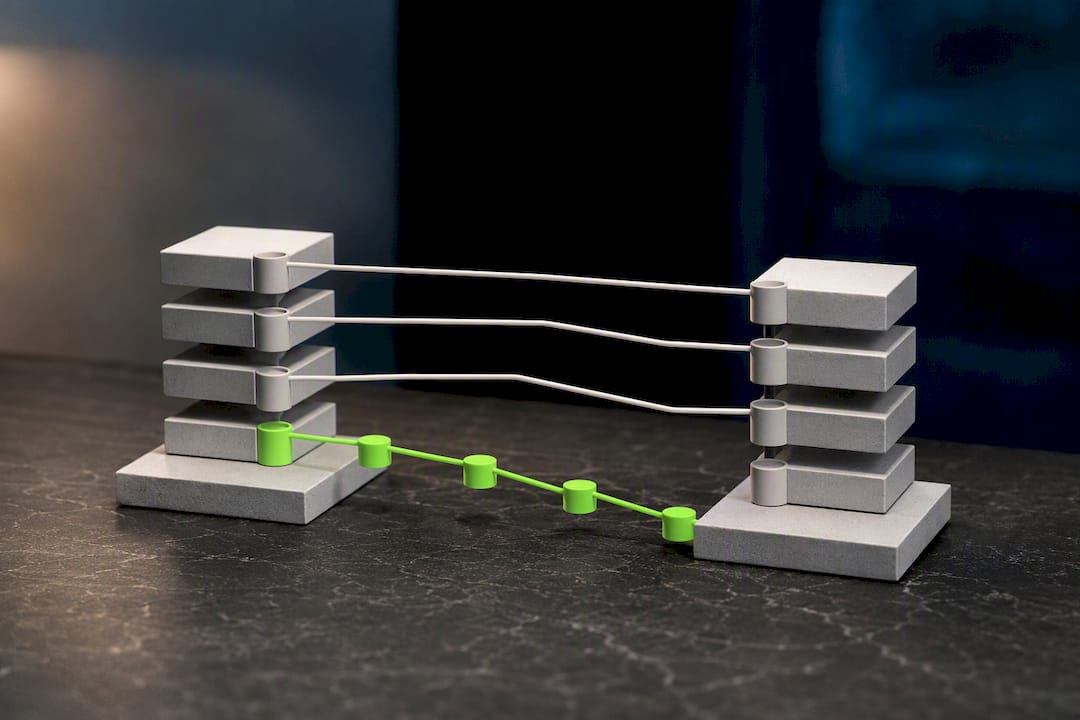
Rootless voicings help enormously here, particularly on keyboard or guitar. Dropping the root and voicing a dominant chord as just the 3rd, 7th, and a color tone gives you more freedom to move smoothly into the next chord's guide tones without the root note anchoring your hand in place. Open Music Theory's caution applies directly: tritone substitutions resolve most convincingly into the tonic, and clean voice leading into that resolution is what makes the difference audible rather than just theoretically present.
A Short History of How Substitution Practices Evolved
Functional harmony in the common practice period already relied on close relatives like the relative minor and the Neapolitan sixth chord, so substitution's roots predate jazz by centuries. What changed in the twentieth century was density: swing and bebop musicians began treating reharmonization as an improvisational tool, not just a compositional one, stacking secondary dominants and tritone subs into standards on the fly.
The tritone substitution itself became a defining feature of bebop harmony in the 1940s, prized for the chromatic bass motion it made possible over the more static root movement of earlier swing charts. Standards like The Girl from Ipanema became famous partly for how naturally they absorbed extended reharmonization, and jazz pedagogy since has treated substitution as core vocabulary rather than an advanced trick.
Pop and rock absorbed a lighter version of the same ideas starting in the 1960s and 1970s, borrowing modal interchange and secondary dominants from jazz and Brill Building songwriting without adopting jazz's full harmonic density. Today, the same devices that bebop players used to reharmonize standards show up, scaled down, in synth pop bridges and film scores. The theory didn't change. The context it gets applied in kept expanding.
Where to Learn More About Reharmonization
For deeper study, Berklee Online's reharmonization primer covers functional analysis in more depth, Open Music Theory's substitutions chapter walks through notated examples, and piano.org's chord substitution lesson breaks down voicing mechanics with audio.
Try It Yourself With The DeputIE
Reading about substitution only gets you so far. The fastest way to internalize which swaps work is to hear five versions of the same four bars back to back, which is exactly what The DeputIE's chord progression tools are built for. You can toggle a tritone sub in and out of a ii–V–I, drag in a secondary dominant before a target chord, and hear the difference immediately without re-entering the whole progression by hand.
Once a substitution earns its place in your arrangement, export it as MIDI and finish the track in your own DAW. If you want a structured starting point, the step-by-step exercises in the user manual mirror the practice routine outlined earlier in this guide, including the tritone-on-a-ii–V–I drill.
Where Conventional Substitution Advice Misses the Point
Most guides to chord substitution front load theory. Scale degrees, Roman numerals, the tritone's exact interval math, and then leave you to figure out application on your own. That ordering gets the priorities backward for a working songwriter.
The theory in this guide matters, but it's in service of one skill: knowing which single chord to touch in a progression you already have, without breaking the melody sitting on top of it. That's a listening skill first and a theory skill second. Musicians who treat substitution as a vocabulary list to memorize tend to over apply it, stacking three clever swaps into four bars and wondering why the song suddenly feels aimless.
The better habit, and the one this guide keeps returning to, is restraint paired with speed of testing. Change one chord, listen immediately, keep it or reject it, move on. You don't need to hold twelve substitution categories in your head while writing. You need to recognize, in the moment, whether a chord is currently doing its job well enough to leave alone.
— Vigilantie
Sources
- Chord Substitution and Reharmonization - Berklee Online
- Substitutions — Open Music Theory
- Piano
- Chord substitution — Wikipedia
FAQ
What chords can be substituted?
Any chord can be substituted as long as the replacement preserves the original's harmonic function. Common candidates include swapping I for vi or iii (diatonic substitution), replacing a dominant V7 with the dominant seventh a tritone away, and using secondary dominants to briefly tonicize another chord in the key.
Can you explain tritone substitution in simple terms?
A tritone substitution replaces a dominant seventh chord with another dominant seventh whose root sits a tritone (six half steps) away. Both chords share the same two guide tones, so the tension resolves the same way, but the bass now moves by a smooth half step instead of a wider leap.
Why do tritone substitutions work?
They work because the original dominant chord and its tritone substitute contain the identical tritone interval between their 3rd and 7th, the notes that create the pull toward resolution. Swapping the root doesn't disturb that internal tension, it just changes the chromatic path the bass takes to get there.
What is diatonic chord substitution?
Diatonic substitution replaces one chord with another chord built from the same key that shares one or more notes and a similar function, such as swapping the tonic I for the relative minor vi. Because the chords overlap in pitch content, the substitution keeps the harmony coherent while shifting its color.